
Taking Research and Development Tax Credits
OUR BLOG Our Published Article Back to Articles February 2019 JAMIE HERZLICH View Article PDF Link...
On August 27, 2015, the National Labor Relations Board (NLRB) handed down a landmark decision that could have real consequences for subcontractors and potentially franchises and industries that are engaged in joint businesses. The decision, which was the product of a 3-2 vote involving sanitation workers, revised the “joint employer” standard for determining when one company shares legal responsibility for employees hired by another.
The case involved whether Silicon Valley recycling plant, Browning-Ferris Industries, should legally be considered the employer of workers supplied by sub-contractor, Leadpoint Business Services. Browning-Ferris paid Leadpoint to sort recycling materials. Leadpoint employees separated paper from plastic and glass on conveyor belts which were owned by Browning-Ferris and run by Browning-Ferris employees. Leadpoint determined its workers’ salaries and decided whom they should hire, fire, and promote, or demote. Browning-Ferris simply decided what hours they would run their plant and which lines they would run each day. On one occasion, Browning-Ferris caught a Leadpoint employee drinking whiskey on the job and asked for his termination. The NLRB decided that this constituted enough “indirect” control to legally classify Browning-Ferris as a co-employer of Leadpoint’s workers, meaning Browning-Ferris would be liable for overtime pay, taxes, and benefits whenever they are mandated for employees.
Before the decision, one business couldn’t be held liable for employment-related matters at another unless they had direct control over the employees in question. The new “joint employer” test, however, means that the NLRB could hold businesses responsible for employment policies even if they only exercise indirect control over such employees. That means employers may be responsible for workers’ rights even if they don’t contract directly with them. This could have big implications for franchise restaurants and companies who use staffing firms as a labor source. These staffing firms help the economy run more efficiently by allowing companies to focus on their core specialties while delegating tangential services to sub-contractors. If the ruling stands however, both entities will become co-employers of the contract workers. That means an additional level of oversight by the end-user company along with a basket of added complexities could become commonplace in each contracting arrangement.
Now, a union representing workers will be legally entitled to bargain with not only the sub-contractor but also the end-user of the labor. Attorney Marshall B. Babson who helped write a brief for the U.S. Chamber of Commerce opposing the rule had this to say: “The decision today could be one of the more significant by the N.L.R.B. in the last 35 years. Depending on how the board applies its new ‘indirect test,’ it will likely ensnare an ever-widening circle of employers and bargaining relationships.” Board officials announced as part of the ruling that they would consider the indirect control inquiry on a case-by-case basis.
The 3-2 decision that was handed down on August 27, 2015 was split along party lines. The three Democrats cited in their decision a “dramatic growth in contingent employment relationships” that “potentially undermines the core protections of the act for the employees impacted by these economic changes.” The two dissenting republicans voiced their concern saying: “The result is a new test that confuses the definition of a joint employer and will predictably produce broad-based instability in bargaining relationships.”
In view of the NLRB decision, planning taxpayers involved in large subcontractor relationships should consider the following risk minimization techniques: First, determine whether your subcontractor is itself functioning as a first-tier subcontractor. For all U.S. subcontractors in your supply chain obtain verification that all workers:
Taxpayers should instruct their purchasing departments to establish procedures ensuring that all vendors are informed of these requirements and create appropriate verification processes.
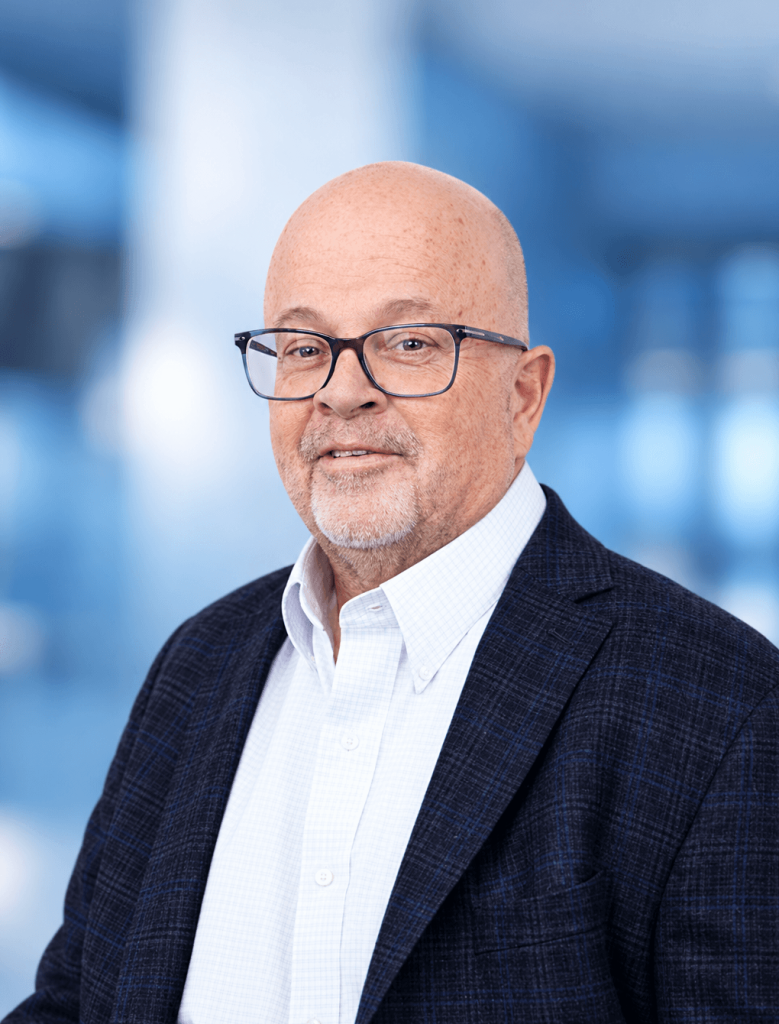
Charles R. Goulding, Attorney/CPA, is the President of R&D Tax Saver, an interdisciplinary tax and engineering firm that specializes in R&D tax credits.
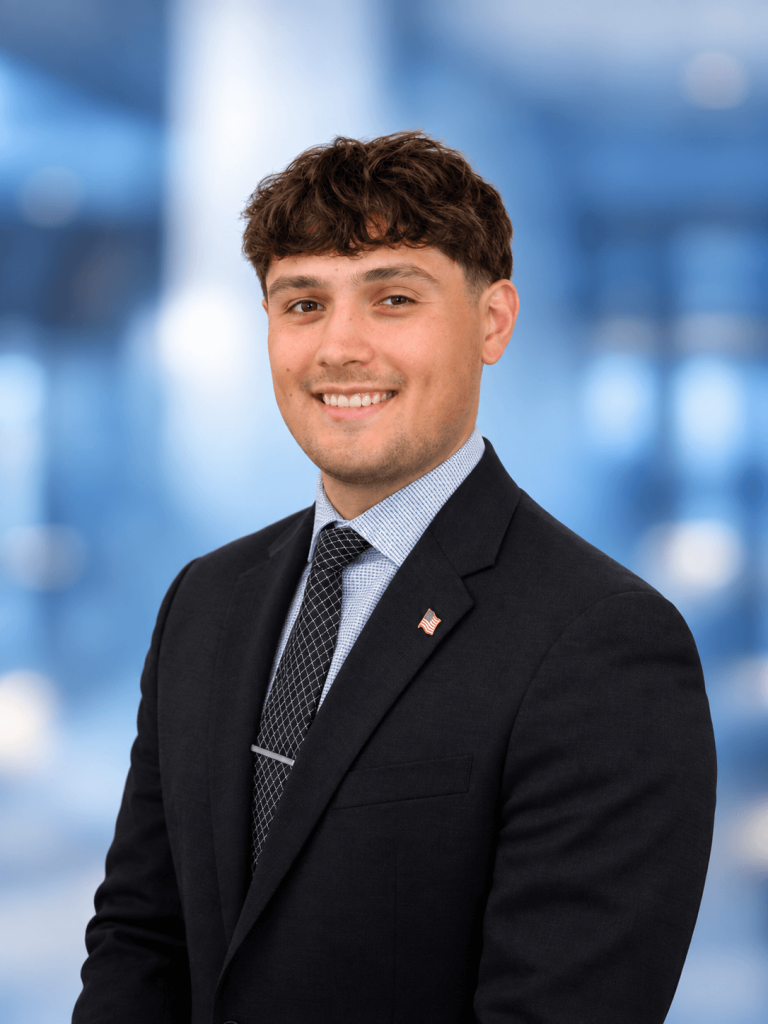
Michael Wilshere is a Tax Analyst with R&D Tax Savers.
OUR BLOG Our Published Article Back to Articles February 2019 JAMIE HERZLICH View Article PDF Link...
OUR BLOG Our Published Article Back to Articles March 2018 By Charles R. Goulding View Article...
OUR BLOG Our Published Article Back to Articles June 2021 By Charles R. Goulding View Article...
OUR BLOG Our Published Article Back to Articles February 2019 JAMIE HERZLICH View Article PDF Link to Article Related Articles...
OUR BLOG Our Published Article Back to Articles March 2018 By Charles R. Goulding View Article PDF Link to Article...
OUR BLOG Our Published Article Back to Articles June 2021 By Charles R. Goulding View Article PDF Link to Article...
Our proof is in the pudding savings. See for yourself how you can save
thousands of dollars with our decades of tax incentive expertise. The pudding is on us.
Charles R. Goulding is an Attorney/CPA, President and founder of Energy Tax Savers/R&D Tax Savers, two divisions of a national tax consulting firm. Previously, he was a Managing Director at Cooper Industries Inc. (now Eaton) in Houston, Texas. Before joining Cooper, Mr. Goulding was a vice president of Dover Corporation, an eight billion dollar sales NYSE diversified industrial manufacturer. At both companies, Mr. Goulding created and administered company-wide R&D Tax Credit programs. These programs encompassed both domestic and international business operations and have helped generate over $600 million in tax savings for their respective firms. Mr. Goulding has been at the forefront of R&D Tax Credit work since the credit’s inception in 1981.
Mr. Goulding has a law degree from Brooklyn Law School (Juris Doctor) and an MBA from Adelphi University. Mr. Goulding also participated in Pace University’s Doctor of Business Administration Program. His undergraduate degree is from the State University of New York at Stony Brook where he was a double major in Political Science and Economics. He spent his junior year abroad at the University of Copenhagen, Denmark.
Mr. Goulding is a former President of the New York Chapter of the Tax Executives Institute and also participated in Pace University’s Doctor of Business Administration Program. He has served as the co-chairman of the Taxation of Mergers and Acquisition conferences in Chicago, Houston, New York City, San Francisco and Paris, France. He recently chaired New York’s Solar Investment Conference.
He has authored over 800 articles for numerous tax publications including International Business, International Tax Journal, Euromoney, Taxation for Accountants, The Practical Accountant, The CPA Journal, and Corporate Business Taxation Monthly.
Mr. Goulding successfully litigated the Dover Corporation case in U.S. Tax Court (the first check the box case) and the Pulsar International case on reasonable compensation. He is also the Mayor of the Village of Oyster Bay Cove, New York
Jacob Goldman, LEED AP, is Vice President and Chief Engineer of Energy Tax Savers/R&D Tax Savers. Since co-founding the Company in 2005, Mr. Goldman has helped secure over a billion dollars in tax deductions across 17,000+ projects. His expertise includes R&D Tax Credits and energy related incentives such as Section 179D and Investment Tax Credits under the Inflation Reduction Act (IRA).
Mr. Goldman is an award-winning speaker, distilling intricate tax codes into actionable strategies. He frequently presents at national conferences like AEE, IGSHPA, LightFair, and NFMT, as well as local chapters of USGBC, ASHRAE, IFMA, BOMA, and beyond. His most recent accolades include the 2023 AEE Northeast Regional Award for Energy Professional Development.
His thought leadership has played an integral role in advising the DOE, NEMA, and NRDC on Section 179D extensions. He has pioneered the firm’s national practice for IRA incentives, from universities leveraging solar tax credits to corporations optimizing energy efficiency deductions, Mr. Goldman’s expertise is at the cornerstone of sustainable tax strategy.
Mr. Goldman has authored over 150 articles in leading industry publications including Corporate Business Taxation Monthly, Building Operating Management, Thomson Reuters, Green Lodging News, and International Parking Institute.
With a BS in Chemical Engineering from the University of Buffalo and an MBA from the University of Maine, Mr. Goldman brings a rare blend of technical mastery and financial acumen to the complex world of tax optimization.
Charles R. Goulding is an Attorney/CPA, President and founder of Energy Tax Savers/R&D Tax Savers, two divisions of a national tax consulting firm. Previously, he was a Managing Director at Cooper Industries Inc. (now Eaton) in Houston, Texas. Before joining Cooper, Mr. Goulding was a vice president of Dover Corporation, an eight billion dollar sales NYSE diversified industrial manufacturer. At both companies, Mr. Goulding created and administered company-wide R&D Tax Credit programs. These programs encompassed both domestic and international business operations and have helped generate over $600 million in tax savings for their respective firms. Mr. Goulding has been at the forefront of R&D Tax Credit work since the credit’s inception in 1981.
Mr. Goulding has a law degree from Brooklyn Law School (Juris Doctor) and an MBA from Adelphi University. Mr. Goulding also participated in Pace University’s Doctor of Business Administration Program. His undergraduate degree is from the State University of New York at Stony Brook where he was a double major in Political Science and Economics. He spent his junior year abroad at the University of Copenhagen, Denmark.
Mr. Goulding is a former President of the New York Chapter of the Tax Executives Institute and also participated in Pace University’s Doctor of Business Administration Program. He has served as the co-chairman of the Taxation of Mergers and Acquisition conferences in Chicago, Houston, New York City, San Francisco and Paris, France. He recently chaired New York’s Solar Investment Conference.
He has authored over 800 articles for numerous tax publications including International Business, International Tax Journal, Euromoney, Taxation for Accountants, The Practical Accountant, The CPA Journal, and Corporate Business Taxation Monthly.
Mr. Goulding successfully litigated the Dover Corporation case in U.S. Tax Court (the first check the box case) and the Pulsar International case on reasonable compensation. He is also the Mayor of the Village of Oyster Bay Cove, New York
Raymond Kumar is a CPA and Director with Energy Tax Savers/R&D Tax Savers. He joined the firm in 2008 and brings with him Big4 accounting firm experience, where he helped secure specialty tax incentives for Fortune 500 automakers, defense contractors, and consumer goods manufacturers. His tax expertise includes Section 179D incentives and R&D Tax Credits which he has specialized in his entire professional career.
Mr. Kumar plays a key role in managing of the firm’s national Section 179D practice, working closely with clients and partners to identify and quantify tax savings. He is involved in every step of the process to ensure project success.
Mr. Kumar is a frequent author and presenter on tax incentives and has presented at the Human Centric Sustainability Event at Yankee Stadium, Energize Long Island conference, and the NYS Society of Professional Engineers Annual Conference. He has numerous published articles covering tax incentives, featured in Retrofit Magazine, Corporate Business Taxation Monthly, and FacilitiesNet.
Mr. Kumar holds a BBA in Accounting from Adelphi University and an MBA from NYU Stern School of Business. Mr. Kumar is a Certified Public Accountant (CPA), licensed to practice in New York.
Andrea Albanese is a Director with Energy Tax Savers/R&D Tax Savers. She joined the firm in 2010 and has played a key role in establishing and growing the firm’s national R&D Tax Credit practice. She oversees R&D Tax Credits and client relationships across a variety of industries including software, manufacturing, distribution, architecture and engineering, food and beverage, and aerospace/defense.
Ms. Albanese specializes in helping clients and CPAs identify, quantify, and maximize R&D Tax Credit benefits. She has helped secure tax credits for businesses ranging from start-ups to Fortune 500 companies, in both the public and private sectors. Her recent projects include a large e-commerce distributor, a London-based VR company, and a large manufacturer with multi-state operations. Her industry focus includes R&D Tax Credits for food and beverage production.
Her tax incentive expertise includes obtaining payroll R&D Tax Credits for start-ups as well helping clients obtain New York State refundable life science credits. She has numerous published articles covering tax incentives in leading tax publications such as Thomson Reuters and CCH’s Corporate Business Taxation Monthly.
Ms. Albanese holds a BS in Technology Studies from SUNY Farmingdale.
Lara Tomiko is a Senior Tax Analyst with Energy Tax Savers/R&D Tax Savers. She joined the firm in 2016 and has been involved with R&D Tax Credit studies across various industries, including architecture/engineering, food and beverage, renewable energy, horticulture, and control systems engineering.
Since the passage of the Inflation Reduction Act (IRA), Ms. Tomiko has managed numerous IRA tax projects, securing tax credits for solar, battery, geothermal, EV, and EV charging station installations. She has secured dozens of Elective Pay Inflation Reduction Act (IRA) incentives for K-12 schools, municipalities, non-profits, colleges/universities, as well as religious institutions. Ms. Tomiko also specializes in obtaining the Low-Income Communities Bonus Credit Program, helping clients maximize their benefits under the IRA.
Ms. Tomiko’s expertise also includes Section 179D deductions, helping leading energy service companies obtain tax incentives for energy efficient design.
Ms. Tomiko holds a BA in Sustainability Studies from Stony Brook University.
Ryan Donley is a Senior Tax Analyst with Energy Tax Savers/R&D Tax Savers. He has been with the firm since 2017, managing R&D Tax Credit Studies and partner relationships for a variety of industries including software, beer and wine, machine shops, construction, glass, and managed IT.
Mr. Donley manages R&D Tax Credits for various Manufacturing Extension Partnerships (MEP) including the New York City and New Jersey regions. His tax incentive expertise includes obtaining payroll R&D credits for start-up companies and the beer and wine industry, ranging from craft beverages to large scale producers. Mr. Donely has presented on the utilization of R&D tax incentives for start-up companies and most recently he presented at the Pennsylvania Brewing Symposium.
Mr. Donley holds a BS in Business Administration from SUNY Farmingdale.
Preeti Sulibhavi is a CPA with Energy Tax Savers/R&D Tax Savers. She has been with the firm since 2018 and has handled R&D Tax Credits for companies in a wide range of industries including food and beverage, software, and life sciences. Ms. Sulibhavi has co-authored numerous articles on specialty tax incentives for publications such as Fabbaloo, a leading 3D printing blog.
In addition to business and personal income taxes, Ms. Sulibhavi handles IRS Form 990-T filings and related schedules for non-profit/government entities seeking to claim Elective Pay benefits under the Inflation Reduction Act (IRA).
Ms. Sulibhavi is a licensed Certified Public Accountant in the State of New York. Ms. Sulibhavi holds a BA in Economics with a Minor in Biology from Wellesley College and an MBA in Accounting from Hofstra University, Zarb School of Business.
Peter Saenz is an Engineer with Energy Tax Savers/R&D Tax Savers. He has been with the firm since 2015 and handles R&D Tax Credit studies across various industries, including dental/ medical, biotechnology, machine shops, construction, woodworking, and software design. He brings with him direct experience in robotic process automation, digital transformation, data analytics, and software development.
Mr. Saenz is pursuing his doctorate at Stony Brook University where he researches AI adoption. He holds an MS in Biomedical Engineering from Stony Brook University, along with an Advanced Graduate Certificate in Life Science Innovation & Entrepreneurship. He received his BS in Business Management from SUNY Farmingdale.
His past doctoral research focused on life sciences, specifically in spatial transcriptomics, diagnostics, and microfluidics. He has worked with numerous companies to secure biological innovation-based R&D Tax Credits. Additionally, he has experience in developing Large Language Models and enjoys working with AI clients to maximize their R&D Tax Credits.
Mr. Saenz has co-authored numerous articles on the R&D Tax Credit spanning technological innovation, business, and policy.
Mellissa McIntyre is a Senior Tax Analyst and Engineer with Energy Tax Savers/R&D Tax Savers. She has been with the firm since 2018, focusing on R&D Tax Credit strategies across various industries with a strong focus in architecture, engineering, and life sciences. Ms. McIntyre works with clients to optimize their time-keeping strategies, helping them capture and document qualifying activities more efficiently. Her recent projects include a leading lighting & controls manufacturer, an electronic device manufacturer, and a cosmetics formulation company.
She has extensive experience with federal and state R&D Tax Credit processes throughout New England, where she works with numerous clients to help them take advantage of region-specific R&D tax incentives. Ms. McIntyre has participated in Washington, DC fly-ins to advocate for the R&D Tax Credit program and its importance to American innovation.
Ms. McIntyre holds a BS in Biomedical Engineering from Stony Brook University, with a focus in bioimaging and bioelectricity.
Warren Buzzell Jr. is an Engineer with Energy Tax Savers/R&D Tax Savers. Mr. Buzzell joined the firm in 2020 and has managed with R&D Tax Credit studies in various industries, including manufacturing, software development, architecture/engineering, life science, and lighting.
Mr. Buzzell holds a BS in Manufacturing Engineering from Robert Morris University and an MS in Biomedical Engineering from Stony Brook University. In addition to his engineering background, Mr. Buzzell is also a certified Project Management Professional.
Mr. Buzzell’s experience prior to joining the firm includes working with additive and subtractive manufacturing, automotive glass manufacturing, preclinical studies, and graduate research.
Mr. Buzzell is the co-author of a number of articles on R&D Tax Credits for the additive manufacturing industry, including “3D Printing Technology’s Potential in Traumatic Brain Injury Research”, “The Future of Biomanufacturing: Machine Learning, Automation, and 3D Printing’s Role”, and “3D Printing for Quality Assurance: A Closer Look at Aerospace Component Inspection Protocols”.
Matthew Selman is an Engineer with Energy Tax Savers/R&D Tax Savers. He joined the firm in 2022 and brings with him an industrial engineering background in manufacturing and logistics.
Mr. Selman manages Elective Pay Inflation Reduction Act (IRA) incentives for various energy technologies, including solar, geothermal, thermal storage, and EV charging. He also handles Section 179D deductions for building owners and for designers of all categories of government buildings including federal, state, local, and K-12 public schools. While at the firm, Mr. Selman has been involved with R&D Tax Credit studies with a focus on the manufacturing sector.
Mr. Selman holds a BS in Industrial & Systems Engineering with a Minor in Green Engineering from Virginia Polytechnic Institute.
Valentina Alzate is an Engineer at Energy Tax Savers/R&D Tax Savers. She joined the firm in 2022 and brings experience and knowledge of full-stack software development and data analytics to support client projects across various industries.
Ms. Alzate manages R&D Tax Credit studies with an industry focus on software development, data analytics, and machine learning. She also manages tax credits for clients across multiple sectors including engineering firms and logistics/distribution. Ms. Alzate’s recent projects include securing R&D Credits for a global marketing solutions provider, leading wholesale foodservice provider, and financial software company.
Ms. Alzate holds a BS in Computer Science from Johns Hopkins University.
Andressa Bonafé-Pontes is a Senior Tax Analyst with Energy Tax Savers/R&D Tax Savers. She joined the firm in 2012 and has been involved with R&D Tax Credit studies in various industries, including life sciences, software development, artificial intelligence, and architecture/engineering.
Ms. Bonafé-Pontes has co-authored numerous articles on R&D Tax Credits with a focus on life sciences, 3D printing, and software development, including “The R&D Tax Credit Aspects of AI Vision Technology”, “Emotion-Recognition Technology”, and “The R&D Tax Credit Aspects of Cyber Security Start-Ups”, among many others.
Ms. Bonafé-Pontes holds an MS in International Economic Policy from the Paris Institute of Political Sciences, an MS in Behavioral Sciences from the University of Brasilia, and a PhD in Social Psychology from the University of Brasilia.
Leah Nabangi is an Engineer with Energy Tax Savers/R&D Tax Savers and has been with the firm since 2023. While at the firm, Ms. Nabangi has been involved with R&D Tax Credit studies across various industries including architecture/engineering, food/beverage, electrical engineering, and software development. Ms. Nabangi has experience in various topics such as sustainability and development, data analytics, and machine learning.
Ms. Nabangi holds a BS in Applied Mathematics and Statistics with a double major in Technological Systems Management from Stony Brook University.
Nimra Shakoor is an Engineer with Energy Tax Savers/R&D Tax Savers. Ms. Shakoor graduated from Cornell University with a BS in Environmental Engineering and an MS in Operations Research and Information Engineering. Her focus includes the intersection of environmental sustainability and data science. Since joining the firm, Ms. Shakoor has contributed to R&D Tax Credit studies in warehouse automation and software development. Ms. Shakoor has co-authored numerous articles on the R&D Tax Credit as it relates to college consolidations and additive manufacturing.
Anthony Palumbo is an Engineer with Energy Tax Savers/R&D Tax Savers. Mr. Palumbo holds a BS and MS in Biomedical Engineering from Binghamton University. His graduate research focused on translational biophotonics and computational optical bioimaging, while his undergraduate work emphasized biomedical devices and instrumentation, biopharmaceutical technology, and biomaterials. Since joining the firm, Mr. Palumbo has contributed to R&D Tax Credit studies across various industries including robotics, warehouse automation, and software development. Mr. Palumbo has co-authored numerous articles on the R&D Tax Credit, exploring the intersection of additive manufacturing with developments in AI, industrial policy, and domestic materials sourcing.
Michael Horwitz is a Tax Analyst with Energy Tax Savers/R&D Tax Savers. Mr. Horwitz holds a BS in Electrical Engineering from Washington University in St. Louis. Michael specializes in EPAct Section 179D studies, working closely with clients and partners to identify and quantify tax savings relating to energy efficient design.
Charles R. Goulding is an Attorney/CPA, President and founder of Energy Tax Savers/R&D Tax Savers, two divisions of a national tax consulting firm. Previously, he was a Managing Director at Cooper Industries Inc. (now Eaton) in Houston, Texas. Before joining Cooper, Mr. Goulding was a vice president of Dover Corporation, an eight billion dollar sales NYSE diversified industrial manufacturer. At both companies, Mr. Goulding created and administered company-wide R&D Tax Credit programs. These programs encompassed both domestic and international business operations and have helped generate over $600 million in tax savings for their respective firms. Mr. Goulding has been at the forefront of R&D Tax Credit work since the credit’s inception in 1981.
Mr. Goulding has a law degree from Brooklyn Law School (Juris Doctor) and an MBA from Adelphi University. Mr. Goulding also participated in Pace University’s Doctor of Business Administration Program. His undergraduate degree is from the State University of New York at Stony Brook where he was a double major in Political Science and Economics. He spent his junior year abroad at the University of Copenhagen, Denmark.
Mr. Goulding is a former President of the New York Chapter of the Tax Executives Institute and also participated in Pace University’s Doctor of Business Administration Program. He has served as the co-chairman of the Taxation of Mergers and Acquisition conferences in Chicago, Houston, New York City, San Francisco and Paris, France. He recently chaired New York’s Solar Investment Conference.
He has authored over 800 articles for numerous tax publications including International Business, International Tax Journal, Euromoney, Taxation for Accountants, The Practical Accountant, The CPA Journal, and Corporate Business Taxation Monthly.
Mr. Goulding successfully litigated the Dover Corporation case in U.S. Tax Court (the first check the box case) and the Pulsar International case on reasonable compensation. He is also the Mayor of the Village of Oyster Bay Cove, New York
Jacob Goldman, LEED AP, is Vice President and Chief Engineer of Energy Tax Savers/R&D Tax Savers. Since co-founding the Company in 2005, Mr. Goldman has helped secure over a billion dollars in tax deductions across 17,000+ projects. His expertise includes R&D Tax Credits and energy related incentives such as Section 179D and Investment Tax Credits under the Inflation Reduction Act (IRA).
Mr. Goldman is an award-winning speaker, distilling intricate tax codes into actionable strategies. He frequently presents at national conferences like AEE, IGSHPA, LightFair, and NFMT, as well as local chapters of USGBC, ASHRAE, IFMA, BOMA, and beyond. His most recent accolades include the 2023 AEE Northeast Regional Award for Energy Professional Development.
His thought leadership has played an integral role in advising the DOE, NEMA, and NRDC on Section 179D extensions. He has pioneered the firm’s national practice for IRA incentives, from universities leveraging solar tax credits to corporations optimizing energy efficiency deductions, Mr. Goldman’s expertise is at the cornerstone of sustainable tax strategy.
Mr. Goldman has authored over 150 articles in leading industry publications including Corporate Business Taxation Monthly, Building Operating Management, Thomson Reuters, Green Lodging News, and International Parking Institute.
With a BS in Chemical Engineering from the University of Buffalo and an MBA from the University of Maine, Mr. Goldman brings a rare blend of technical mastery and financial acumen to the complex world of tax optimization.
Charles R. Goulding is an Attorney/CPA, President and founder of Energy Tax Savers/R&D Tax Savers, two divisions of a national tax consulting firm. Previously, he was a Managing Director at Cooper Industries Inc. (now Eaton) in Houston, Texas. Before joining Cooper, Mr. Goulding was a vice president of Dover Corporation, an eight billion dollar sales NYSE diversified industrial manufacturer. At both companies, Mr. Goulding created and administered company-wide R&D Tax Credit programs. These programs encompassed both domestic and international business operations and have helped generate over $600 million in tax savings for their respective firms. Mr. Goulding has been at the forefront of R&D Tax Credit work since the credit’s inception in 1981.
Mr. Goulding has a law degree from Brooklyn Law School (Juris Doctor) and an MBA from Adelphi University. Mr. Goulding also participated in Pace University’s Doctor of Business Administration Program. His undergraduate degree is from the State University of New York at Stony Brook where he was a double major in Political Science and Economics. He spent his junior year abroad at the University of Copenhagen, Denmark.
Mr. Goulding is a former President of the New York Chapter of the Tax Executives Institute and also participated in Pace University’s Doctor of Business Administration Program. He has served as the co-chairman of the Taxation of Mergers and Acquisition conferences in Chicago, Houston, New York City, San Francisco and Paris, France. He recently chaired New York’s Solar Investment Conference.
He has authored over 800 articles for numerous tax publications including International Business, International Tax Journal, Euromoney, Taxation for Accountants, The Practical Accountant, The CPA Journal, and Corporate Business Taxation Monthly.
Mr. Goulding successfully litigated the Dover Corporation case in U.S. Tax Court (the first check the box case) and the Pulsar International case on reasonable compensation. He is also the Mayor of the Village of Oyster Bay Cove, New York
Raymond Kumar is a CPA and Director with Energy Tax Savers/R&D Tax Savers. He joined the firm in 2008 and brings with him Big4 accounting firm experience, where he helped secure specialty tax incentives for Fortune 500 automakers, defense contractors, and consumer goods manufacturers. His tax expertise includes Section 179D incentives and R&D Tax Credits which he has specialized in his entire professional career.
Mr. Kumar plays a key role in managing of the firm’s national Section 179D practice, working closely with clients and partners to identify and quantify tax savings. He is involved in every step of the process to ensure project success.
Mr. Kumar is a frequent author and presenter on tax incentives and has presented at the Human Centric Sustainability Event at Yankee Stadium, Energize Long Island conference, and the NYS Society of Professional Engineers Annual Conference. He has numerous published articles covering tax incentives, featured in Retrofit Magazine, Corporate Business Taxation Monthly, and FacilitiesNet.
Mr. Kumar holds a BBA in Accounting from Adelphi University and an MBA from NYU Stern School of Business. Mr. Kumar is a Certified Public Accountant (CPA), licensed to practice in New York.
Andrea Albanese is a Director with Energy Tax Savers/R&D Tax Savers. She joined the firm in 2010 and has played a key role in establishing and growing the firm’s national R&D Tax Credit practice. She oversees R&D Tax Credits and client relationships across a variety of industries including software, manufacturing, distribution, architecture and engineering, food and beverage, and aerospace/defense.
Ms. Albanese specializes in helping clients and CPAs identify, quantify, and maximize R&D Tax Credit benefits. She has helped secure tax credits for businesses ranging from start-ups to Fortune 500 companies, in both the public and private sectors. Her recent projects include a large e-commerce distributor, a London-based VR company, and a large manufacturer with multi-state operations. Her industry focus includes R&D Tax Credits for food and beverage production.
Her tax incentive expertise includes obtaining payroll R&D Tax Credits for start-ups as well helping clients obtain New York State refundable life science credits. She has numerous published articles covering tax incentives in leading tax publications such as Thomson Reuters and CCH’s Corporate Business Taxation Monthly.
Ms. Albanese holds a BS in Technology Studies from SUNY Farmingdale.
Lara Tomiko is a Senior Tax Analyst with Energy Tax Savers/R&D Tax Savers. She joined the firm in 2016 and has been involved with R&D Tax Credit studies across various industries, including architecture/engineering, food and beverage, renewable energy, horticulture, and control systems engineering.
Since the passage of the Inflation Reduction Act (IRA), Ms. Tomiko has managed numerous IRA tax projects, securing tax credits for solar, battery, geothermal, EV, and EV charging station installations. She has secured dozens of Elective Pay Inflation Reduction Act (IRA) incentives for K-12 schools, municipalities, non-profits, colleges/universities, as well as religious institutions. Ms. Tomiko also specializes in obtaining the Low-Income Communities Bonus Credit Program, helping clients maximize their benefits under the IRA.
Ms. Tomiko’s expertise also includes Section 179D deductions, helping leading energy service companies obtain tax incentives for energy efficient design.
Ms. Tomiko holds a BA in Sustainability Studies from Stony Brook University.
Ryan Donley is a Senior Tax Analyst with Energy Tax Savers/R&D Tax Savers. He has been with the firm since 2017, managing R&D Tax Credit Studies and partner relationships for a variety of industries including software, beer and wine, machine shops, construction, glass, and managed IT.
Mr. Donley manages R&D Tax Credits for various Manufacturing Extension Partnerships (MEP) including the New York City and New Jersey regions. His tax incentive expertise includes obtaining payroll R&D credits for start-up companies and the beer and wine industry, ranging from craft beverages to large scale producers. Mr. Donely has presented on the utilization of R&D tax incentives for start-up companies and most recently he presented at the Pennsylvania Brewing Symposium.
Mr. Donley holds a BS in Business Administration from SUNY Farmingdale.
Preeti Sulibhavi is a CPA with Energy Tax Savers/R&D Tax Savers. She has been with the firm since 2018 and has handled R&D Tax Credits for companies in a wide range of industries including food and beverage, software, and life sciences. Ms. Sulibhavi has co-authored numerous articles on specialty tax incentives for publications such as Fabbaloo, a leading 3D printing blog.
In addition to business and personal income taxes, Ms. Sulibhavi handles IRS Form 990-T filings and related schedules for non-profit/government entities seeking to claim Elective Pay benefits under the Inflation Reduction Act (IRA).
Ms. Sulibhavi is a licensed Certified Public Accountant in the State of New York. Ms. Sulibhavi holds a BA in Economics with a Minor in Biology from Wellesley College and an MBA in Accounting from Hofstra University, Zarb School of Business.
Peter Saenz is an Engineer with Energy Tax Savers/R&D Tax Savers. He has been with the firm since 2015 and handles R&D Tax Credit studies across various industries, including dental/ medical, biotechnology, machine shops, construction, woodworking, and software design. He brings with him direct experience in robotic process automation, digital transformation, data analytics, and software development.
Mr. Saenz is pursuing his doctorate at Stony Brook University where he researches AI adoption. He holds an MS in Biomedical Engineering from Stony Brook University, along with an Advanced Graduate Certificate in Life Science Innovation & Entrepreneurship. He received his BS in Business Management from SUNY Farmingdale.
His past doctoral research focused on life sciences, specifically in spatial transcriptomics, diagnostics, and microfluidics. He has worked with numerous companies to secure biological innovation-based R&D Tax Credits. Additionally, he has experience in developing Large Language Models and enjoys working with AI clients to maximize their R&D Tax Credits.
Mr. Saenz has co-authored numerous articles on the R&D Tax Credit spanning technological innovation, business, and policy.
Mellissa McIntyre is a Senior Tax Analyst and Engineer with Energy Tax Savers/R&D Tax Savers. She has been with the firm since 2018, focusing on R&D Tax Credit strategies across various industries with a strong focus in architecture, engineering, and life sciences. Ms. McIntyre works with clients to optimize their time-keeping strategies, helping them capture and document qualifying activities more efficiently. Her recent projects include a leading lighting & controls manufacturer, an electronic device manufacturer, and a cosmetics formulation company.
She has extensive experience with federal and state R&D Tax Credit processes throughout New England, where she works with numerous clients to help them take advantage of region-specific R&D tax incentives. Ms. McIntyre has participated in Washington, DC fly-ins to advocate for the R&D Tax Credit program and its importance to American innovation.
Ms. McIntyre holds a BS in Biomedical Engineering from Stony Brook University, with a focus in bioimaging and bioelectricity.
Warren Buzzell Jr. is an Engineer with Energy Tax Savers/R&D Tax Savers. Mr. Buzzell joined the firm in 2020 and has managed with R&D Tax Credit studies in various industries, including manufacturing, software development, architecture/engineering, life science, and lighting.
Mr. Buzzell holds a BS in Manufacturing Engineering from Robert Morris University and an MS in Biomedical Engineering from Stony Brook University. In addition to his engineering background, Mr. Buzzell is also a certified Project Management Professional.
Mr. Buzzell’s experience prior to joining the firm includes working with additive and subtractive manufacturing, automotive glass manufacturing, preclinical studies, and graduate research.
Mr. Buzzell is the co-author of a number of articles on R&D Tax Credits for the additive manufacturing industry, including “3D Printing Technology’s Potential in Traumatic Brain Injury Research”, “The Future of Biomanufacturing: Machine Learning, Automation, and 3D Printing’s Role”, and “3D Printing for Quality Assurance: A Closer Look at Aerospace Component Inspection Protocols”.
Matthew Selman is an Engineer with Energy Tax Savers/R&D Tax Savers. He joined the firm in 2022 and brings with him an industrial engineering background in manufacturing and logistics.
Mr. Selman manages Elective Pay Inflation Reduction Act (IRA) incentives for various energy technologies, including solar, geothermal, thermal storage, and EV charging. He also handles Section 179D deductions for building owners and for designers of all categories of government buildings including federal, state, local, and K-12 public schools. While at the firm, Mr. Selman has been involved with R&D Tax Credit studies with a focus on the manufacturing sector.
Mr. Selman holds a BS in Industrial & Systems Engineering with a Minor in Green Engineering from Virginia Polytechnic Institute.
Valentina Alzate is an Engineer at Energy Tax Savers/R&D Tax Savers. She joined the firm in 2022 and brings experience and knowledge of full-stack software development and data analytics to support client projects across various industries.
Ms. Alzate manages R&D Tax Credit studies with an industry focus on software development, data analytics, and machine learning. She also manages tax credits for clients across multiple sectors including engineering firms and logistics/distribution. Ms. Alzate’s recent projects include securing R&D Credits for a global marketing solutions provider, leading wholesale foodservice provider, and financial software company.
Ms. Alzate holds a BS in Computer Science from Johns Hopkins University.
Andressa Bonafé-Pontes is a Senior Tax Analyst with Energy Tax Savers/R&D Tax Savers. She joined the firm in 2012 and has been involved with R&D Tax Credit studies in various industries, including life sciences, software development, artificial intelligence, and architecture/engineering.
Ms. Bonafé-Pontes has co-authored numerous articles on R&D Tax Credits with a focus on life sciences, 3D printing, and software development, including “The R&D Tax Credit Aspects of AI Vision Technology”, “Emotion-Recognition Technology”, and “The R&D Tax Credit Aspects of Cyber Security Start-Ups”, among many others.
Ms. Bonafé-Pontes holds an MS in International Economic Policy from the Paris Institute of Political Sciences, an MS in Behavioral Sciences from the University of Brasilia, and a PhD in Social Psychology from the University of Brasilia.
Leah Nabangi is an Engineer with Energy Tax Savers/R&D Tax Savers and has been with the firm since 2023. While at the firm, Ms. Nabangi has been involved with R&D Tax Credit studies across various industries including architecture/engineering, food/beverage, electrical engineering, and software development. Ms. Nabangi has experience in various topics such as sustainability and development, data analytics, and machine learning.
Ms. Nabangi holds a BS in Applied Mathematics and Statistics with a double major in Technological Systems Management from Stony Brook University.
Nimra Shakoor is an Engineer with Energy Tax Savers/R&D Tax Savers. Ms. Shakoor graduated from Cornell University with a BS in Environmental Engineering and an MS in Operations Research and Information Engineering. Her focus includes the intersection of environmental sustainability and data science. Since joining the firm, Ms. Shakoor has contributed to R&D Tax Credit studies in warehouse automation and software development. Ms. Shakoor has co-authored numerous articles on the R&D Tax Credit as it relates to college consolidations and additive manufacturing.
Anthony Palumbo is an Engineer with Energy Tax Savers/R&D Tax Savers. Mr. Palumbo holds a BS and MS in Biomedical Engineering from Binghamton University. His graduate research focused on translational biophotonics and computational optical bioimaging, while his undergraduate work emphasized biomedical devices and instrumentation, biopharmaceutical technology, and biomaterials. Since joining the firm, Mr. Palumbo has contributed to R&D Tax Credit studies across various industries including robotics, warehouse automation, and software development. Mr. Palumbo has co-authored numerous articles on the R&D Tax Credit, exploring the intersection of additive manufacturing with developments in AI, industrial policy, and domestic materials sourcing.
Michael Horwitz is a Tax Analyst with Energy Tax Savers/R&D Tax Savers. Mr. Horwitz holds a BS in Electrical Engineering from Washington University in St. Louis. Michael specializes in EPAct Section 179D studies, working closely with clients and partners to identify and quantify tax savings relating to energy efficient design.